
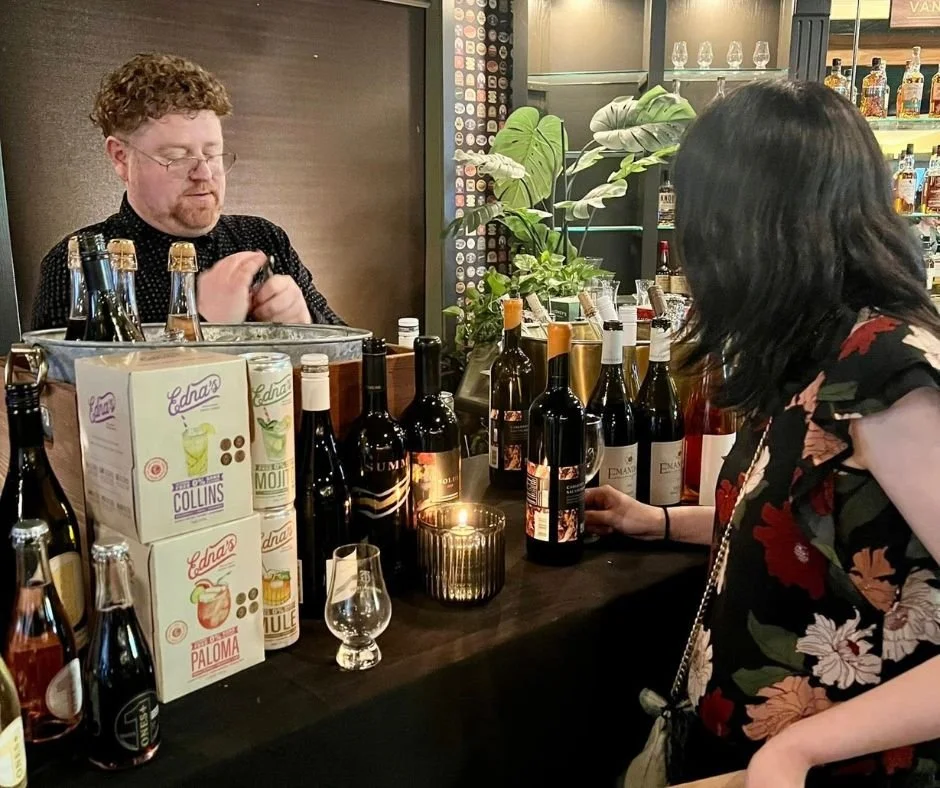
Guests are treated to a range of both alcoholic and non-alc options at the Dine About launch party.
A fine dining establishment may not be the first place people expect to be engaged about thoughtful alcohol use. But in Nanaimo, that’s among the places change is taking root.
The Nanaimo Foundation’s Rethinking Drinking initiative has been working across Mid Vancouver Island – building collaborations, increasing awareness of local services, and encouraging more inclusive drinking culture. This winter, thatwork found a natural partnership with Dine About Mid Island.
The annual “Festival for Foodies,” running January 21-February 8, brings residents into local restaurants during one of the coldest, darkest times of the year. Its goals are clear: strengthen small businesses, foster community engagement, and celebrate culinary creativity. Rather than sitting outside that mission, Rethinking Drinking fits squarely within it.
That alignment was the focus of a recent conversation on ACT3, the local public affairs program hosted by Cathy Holmes on CHLY 101.7 FM. Holmes welcomed Tracey Brown, Executive Director of the Nanaimo Foundation, alongside Sarah Wallbank – co-chef and co-owner of CAMAS in Lantzville and a Dine About leader.
“We’re keeping our food community strong during the winter months because, after the holiday season, which can feel quite abundant, January can in contrast be lean,” Wallbank said – acknowledging that part of the winter lull includes the growing popularity of ‘Dry January’.
Rather than resist that shift, this year’s festival participants are embracing it. Many restaurants are featuring thoughtfully crafted non-alcohol pairings – not as a concession, but as part of the culinary offering and to expand choices.
Holmes reflected on how much the landscape has changed: “It used to be that if you didn’t drink alcohol at a fine dining restaurant you drank soda, or water… there wasn’t really a lot of options out there.”
Wallbank noted that producers are now creating “really delicious libations that are appropriate to have with a meal.” Brown agreed, adding: “To develop that non-alcohol menu, to get the flavour just right and to be able to match it with a food pairing, it’s an art – it’s not just ordering a soda.”
She was equally clear that this isn’t about eliminating alcohol from the table. “I love a good Pinot Noir and I don’t want to give that up. But there’s things we need to be aware of.”
Indeed, Wallbank’s observations confirmed that guests are already drinking differently. Even those who order alcohol often alternate with non-alcohol beverages, moderating so they can enjoy their evening and still drive home safely.
The discussion also touched on generational change, evolving patterns of use – particularly for women and during the COVID-19 pandemic – and a persistent gap in awareness around local treatment and support. One of the motivations behind Rethinking Drinking, Brown noted, was recognizing that “people just don’t know that there’s a plethora of treatments available to folks struggling.”
To help address that gap, the Nanaimo Foundation is hosting an event at Vancouver Island University on March 25 featuring local health experts, physicians, and people with lived experience, aimed at increasing awareness of effective care options.
By weaving these conversations into social, joyful spaces like restaurants, the partnership makes information more visible and normalizes thoughtful choices. It does so without asking anyone to take sides, compromise small businesses, or give up pleasure.
“The culture around pausing, slowing down, enjoying your time, breaking bread with friends over a glass of something truly delicious is truly what it’s about in the restaurant industry,” Wallbank said. “But it doesn't need to have alcohol in it.”